
A Specialism
Non-Designated Heritage Assets.
Not listed. Not scheduled. Not always on a local list. And yet, decisive in planning outcomes — and the source of more refused applications than any single other heritage issue we see.
"Non-designated heritage assets are buildings, monuments, sites, places, areas or landscapes identified as having a degree of heritage significance meriting consideration in planning decisions, but which are not formally designated."
— Annex 2, National Planning Policy Framework (2024)
Why this matters
Owners often discover, mid-application, that a building they assumed was unprotected carries weight under paragraph 209 of the NPPF: "the effect of an application on the significance of a non-designated heritage asset should be taken into account... a balanced judgement will be required having regard to the scale of any harm or loss and the significance of the heritage asset."
That phrase — "balanced judgement" — is where applications are won and lost. It can mean almost anything in the wrong hands, and a decisive advantage in the right ones. Conservation officers, planning inspectors and (on appeal) the Planning Inspectorate all weigh the evidence put before them. Put weak evidence forward and the balance tips against you.
Local plans add a further layer: bespoke local lists, candidate buildings, conservation area appraisals, neighbourhood plan policies, Article 4 directions and emerging heritage strategies. The picture varies dramatically from authority to authority — even between neighbouring districts. We've worked across most of them.
What Actually Counts
The kinds of buildings most often caught.
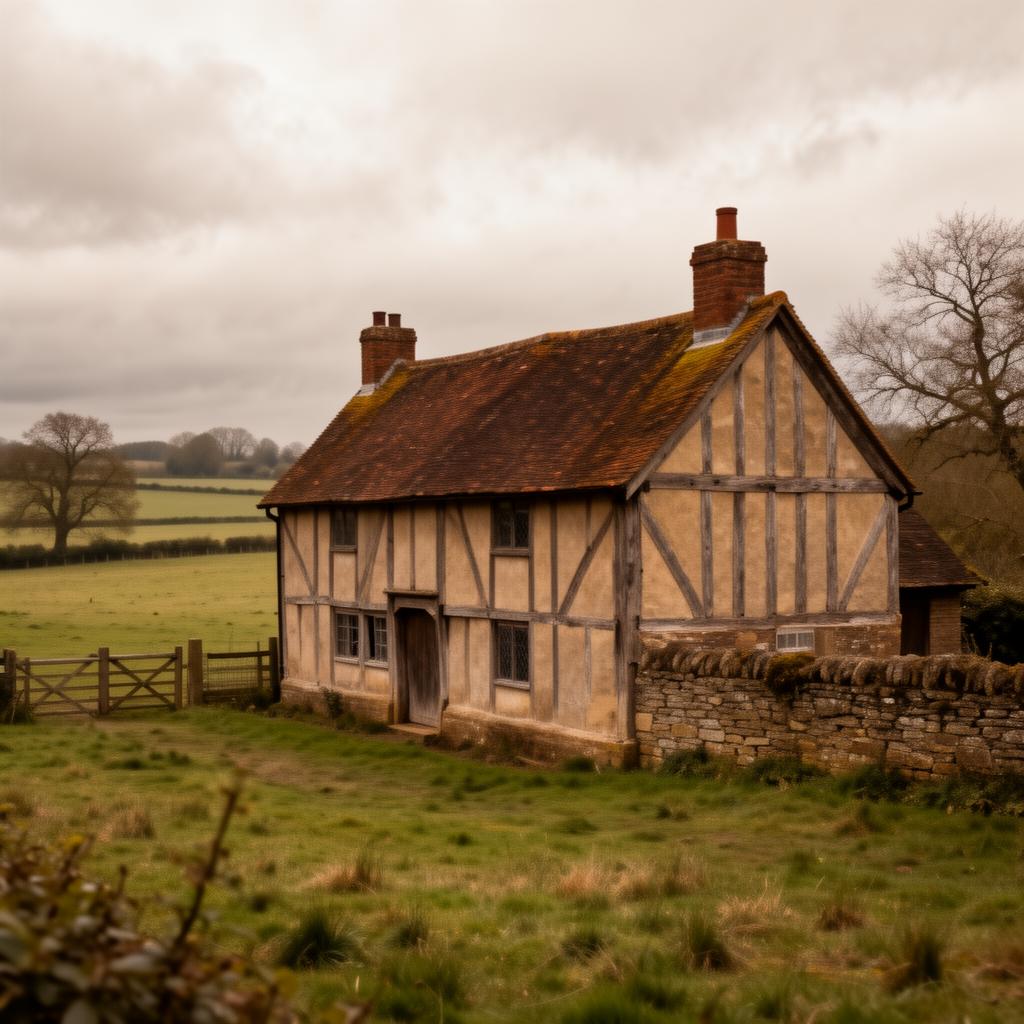
Vernacular cottages
Pre-1850 farm cottages, agricultural workers' homes, smallholdings — often with significant surviving fabric.
Locally listed buildings
Buildings on the local authority's own list, with no national designation but full NPPF protection.
Curtilage structures
Outbuildings, walls, garden features and ancillary buildings within the curtilage of a listed building (which may themselves be listed by association).
Buildings in conservation areas
Even modest, ostensibly unremarkable buildings can be assets if they 'positively contribute' to the area's character.
Historic farm buildings
Barns, oast houses, granaries, stables — all increasingly recognised as significant non-designated assets.
Early industrial heritage
Mills, kilns, forges, lime kilns, pump houses. Often overlooked, almost always significant.
Pre-1919 housing stock
Solid-wall terraces, villas, cottages — particularly where original windows, doors and fabric survive.
Buildings within Registered Parks
Lodges, gatehouses, boundary walls and outbuildings within a Historic England registered landscape.
No Listing, No NDHAs — Still the Right Approach
You don't need a designation to need the right repair.
Many traditionally built houses carry no listing, no local list entry and no conservation area restriction. That does not make them ordinary buildings. Solid walls, lime mortars, timber frames, slate or tile roofs, and breathable finishes all behave differently from modern construction — and they are easily damaged by standard modern materials and methods.
Whether you are repairing a Georgian village house, renovating a Victorian terrace, or remedying damp and decay in a 1920s cottage, the same principles apply: understand the building first, match materials and methods to its construction, and avoid quick fixes that store up expensive problems.
Common requests we help with
- ✦Damp diagnosis in solid-wall buildings
- ✦Cement render or modern plaster removal
- ✦Lime plaster, render and mortar specification
- ✦Appropriate insulation without trapping moisture
- ✦Timber frame repairs and carpentry matching
- ✦Window and door repair versus replacement
- ✦Roof repairs using traditional slates, tiles or thatch
- ✦Finding contractors who understand old buildings
A designation is not what makes a building worthy of care. The way it was built, the materials it contains, and the skills needed to maintain it are what matter. We advise owners of unlisted, traditionally built homes across the UK on repairs and renovations that respect the fabric — and protect the value — of the building.
The Common Pitfalls
Where applications quietly come undone.
Unrecognised significance
A building's heritage value isn't always obvious. Vernacular cottages, agricultural buildings, early industrial structures — all routinely undervalued in initial assessments. The conservation officer rarely makes the same mistake.
Hidden local designations
Local lists, candidate buildings and emerging plan policies can apply protection that doesn't appear on standard planning portals. A pre-application search through the local plan, neighbourhood plan and conservation area appraisal is essential.
Weak heritage statements
Generic templates that don't engage with the specific building invite officers to draw their own — usually less favourable — conclusions. Historic England's GPA 2 sets out what's actually expected.
The wrong precedent
Citing the wrong appeal decisions or misreading a conservation area appraisal can close doors that careful evidence would have opened. Appeal decisions are publicly available — but require expertise to use well.
When It Goes Wrong
Failed applications, enforcement, and how unawareness compounds harm.
The pattern is depressingly consistent: an owner instructs an architect, the architect designs without specialist heritage input, the application is refused on heritage grounds, and the cost of that single misstep is borne for years. In the worst cases — where works proceed without proper consents — enforcement and prosecution follow.
The 'we didn't know it was listed' refusal
Around a third of refusals on heritage grounds involve owners who genuinely believed their property carried no heritage status — typically because the curtilage extends to ancillary structures, or because a non-designated asset within a conservation area was treated as ordinary stock. Mitigation: a 30-minute heritage screening before any design work begins.
Unauthorised works & enforcement
Section 9 of the Planning (Listed Buildings and Conservation Areas) Act 1990 makes unauthorised works to a listed building a criminal offence — strict liability, with no defence of ignorance. Recent prosecutions include a £20,000 fine for an owner in Tower Hamlets (2023), £3,740 in costs and fine for unauthorised work in Margate (2021), and ongoing proceedings against the owner of a Grade II* coach house in Somerset. Enforcement notices can require reinstatement at the owner's expense.
The 'cement render' refusal-then-removal cycle
A common pattern: owner applies for an extension, conservation officer notices recent cement render on the original building, refusal cites cumulative harm and asks for remediation. Mitigation cost: removal of cement render alone often £15,000–£40,000, plus correct lime re-render on top. All avoidable if the wrong material had never been applied.
Refused on weak heritage evidence
Planning Inspectorate appeal decisions repeatedly cite 'inadequate' or 'inappropriately brief' heritage statements as reasons for upholding refusals. The remedy at appeal — commissioning the proper assessment retrospectively — costs more than doing it correctly the first time, and adds 6–9 months to the programme.
How We Approach It
A four-step method, refined across hundreds of cases.
- 01
Establish status early
Local list searches, conservation area appraisals, neighbourhood plans, registered parks, scheduled monuments, Article 4 directions, tree preservation orders, the Historic England Archive — the full picture, on day one. Often achievable within a single afternoon's desktop research.
- 02
Build evidence of significance
Properly researched: archival sources (county record offices, the National Library of Scotland's mapping, historic OS, tithe maps), comparator buildings, fabric analysis, intervention chronology. Significance defined narrowly enough to defend, broadly enough to protect proportionate change.
- 03
Frame the public benefit
Restoration, long-term viable use, optimum viable use, securing the future of the asset, removing later unsympathetic additions — the language that local authorities and inspectors are obliged to weigh in the balance.
- 04
Negotiate, don't capitulate
Pre-application meetings handled with experience. Conservation officers respect well-evidenced argument far more than instant agreement; the inspectors who hear appeals respect it even more. We've worked with most authorities and know how each one tends to think.
Have you been told a building "might" be a heritage asset?
Bring it to the free Zoom. We'll often be able to tell you, in thirty minutes, whether the concern is real, manageable, or entirely overblown — and if it's real, exactly what to do about it.
Book a Conversation